How AI Is Changing Donor Discovery (And What Nonprofits Must Do About It)
For years, nonprofit fundraising relied heavily on visibility in traditional search results.
A donor would search for a cause they care about, browse through several websites, evaluate organizations, and eventually decide where to contribute.
But artificial intelligence is rapidly changing that discovery process.
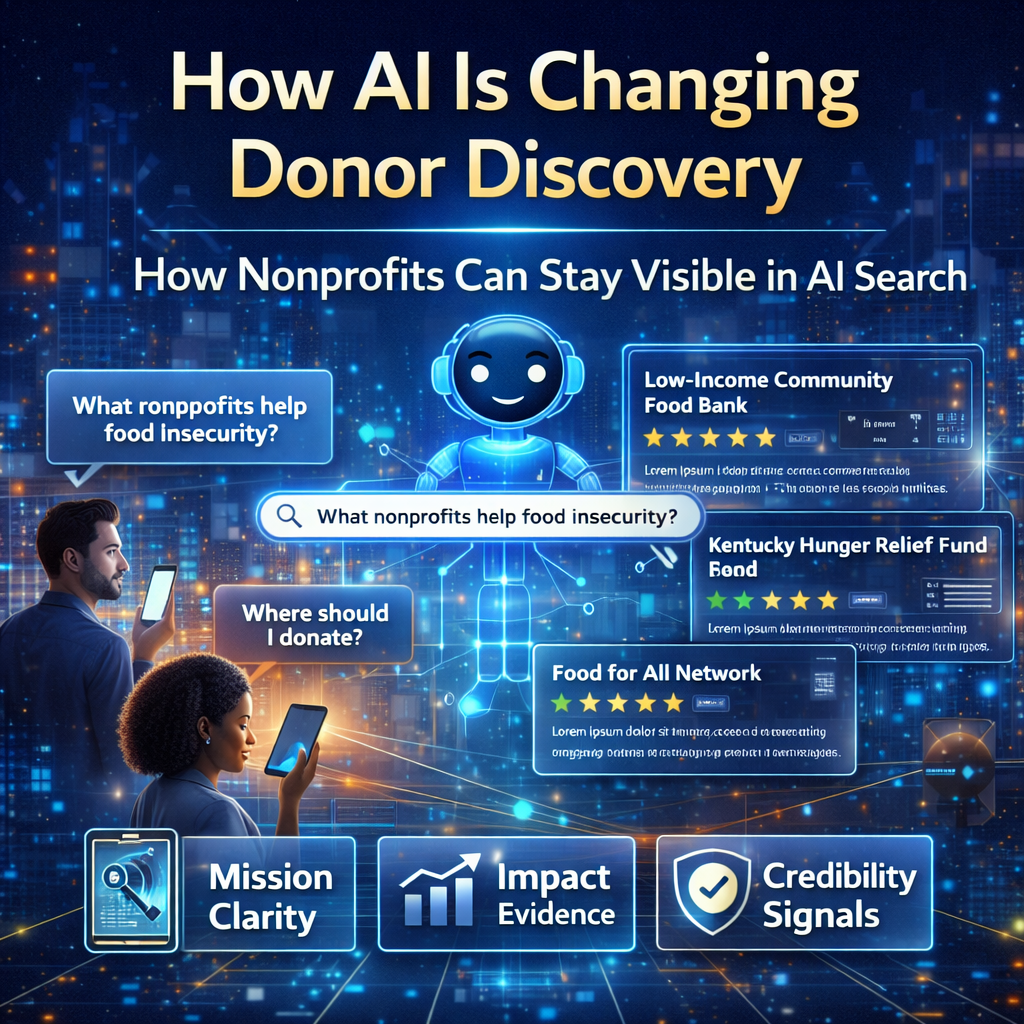
Today, many potential donors are no longer starting with a list of search results. Instead, they are asking AI systems direct questions.
Questions like:
- “What are the best charities helping homeless families?”
- “Which nonprofits support food insecurity in Kentucky?”
- “Where can I donate for disaster relief?”
- “What organizations are trustworthy for cancer research?”
Instead of presenting ten links, AI tools increasingly provide direct recommendations and summaries.
This shift fundamentally changes how nonprofits are discovered.
The Old Donor Discovery Model
In the traditional search environment, discovery looked like this:
Donor question
⬇
Search results
⬇
Multiple website visits
⬇
Evaluation and comparison
⬇
Donation decision
Nonprofits competed primarily for rankings and visibility.
If your website ranked well, you were in the conversation.
The New AI Discovery Model
In the AI era, the process is evolving into something different:
Donor question
⬇
AI evaluation of organizations
⬇
Trust filtering
⬇
AI-generated recommendations
⬇
Shortlist of organizations
⬇
Website visit
In this model, many nonprofits are filtered out before a user ever visits their website.
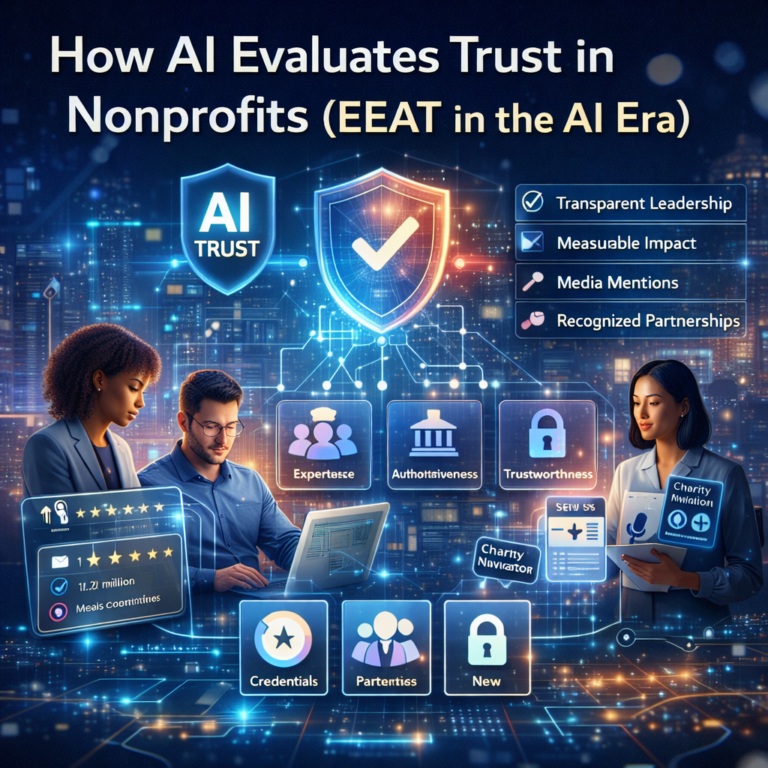
The AI system determines which organizations appear credible enough to recommend.
That’s a massive shift in visibility.
What AI Looks For When Recommending Nonprofits
AI systems attempt to identify organizations that demonstrate clear credibility and mission alignment.
Some of the signals they evaluate include:
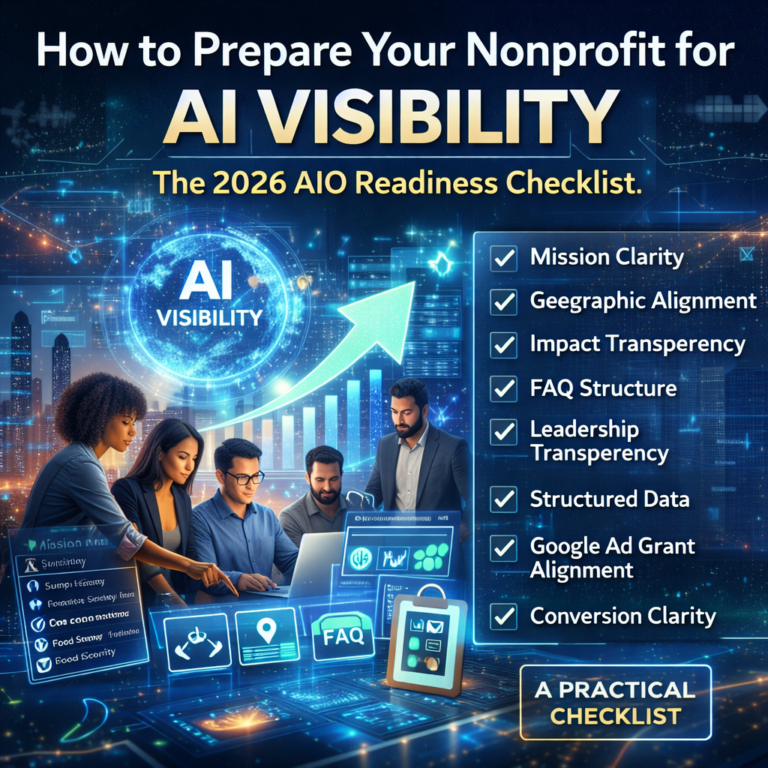
- Clear mission definition
- Geographic relevance
- Documented impact metrics
- Leadership transparency
- Consistent messaging across platforms
- Authority signals across the web
- Structured content that answers donor questions
These factors help AI determine which nonprofits are most appropriate to recommend in response to donor queries.
Organizations that structure their information clearly are more likely to be surfaced in AI-generated summaries.
(For more on structuring content for AI visibility, see our guide:
[How to Prepare Your Nonprofit for AI Visibility Placeholder Link])
Why Smaller Nonprofits Can Still Win
One of the most encouraging aspects of AI-driven discovery is that it doesn’t necessarily favor the largest organizations.
AI systems are less influenced by brand size than by clarity and credibility.
That means smaller nonprofits can compete effectively when they:
- clearly explain their mission
- demonstrate measurable impact
- maintain transparent leadership information
- structure their content effectively
A well-structured website from a smaller organization can outperform a larger organization with unclear messaging.
This creates new opportunities for mission-driven organizations that communicate their work clearly.
How AI Optimization Supports Donor Conversion
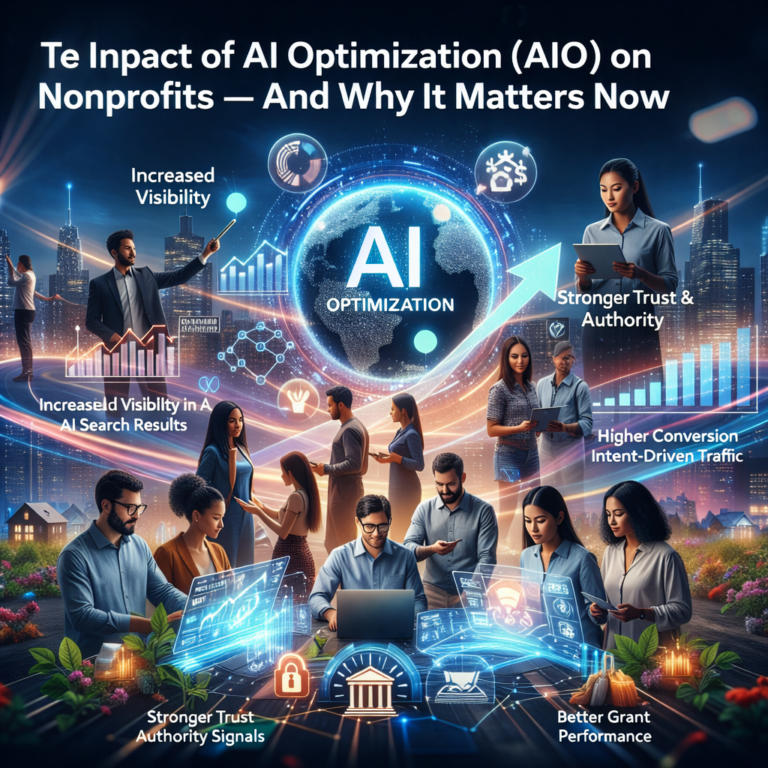
Preparing for AI discovery is not just about visibility.
It also improves the experience donors have once they reach your website.
Clearer messaging helps potential supporters quickly understand:
- what your organization does
- who it helps
- how donations are used
- what impact contributions create
When donors understand your mission quickly and clearly, they are more likely to take action.
This alignment between visibility and clarity is where AI Optimization becomes valuable.
The Connection Between AI Visibility and Google Ad Grants
Many nonprofits rely on the Google Ad Grant program to drive awareness and fundraising.
However, AI-ready websites often perform better in grant campaigns because they:
- align more clearly with user intent
- improve Quality Scores
- increase landing page clarity
- strengthen trust signals
When AI optimization and grant strategy work together, nonprofits often see stronger engagement and better campaign performance.
You can learn more about our Google Grant Management services here:
Google Grant Management
Why This Shift Matters Now
AI-driven search experiences are already shaping how donors research organizations.
As AI assistants and conversational search tools continue to expand, organizations that adapt early will have an advantage in visibility.
Nonprofits that clearly communicate their mission, impact, and credibility are more likely to be included in AI-generated recommendations.
Those that do not may struggle to appear in these emerging discovery environments.
Final Thoughts
Artificial intelligence is transforming how people discover and evaluate nonprofits.
But the organizations most likely to succeed in this new environment are not necessarily those producing the most content.
They are the ones that communicate their mission with the greatest clarity.
Nonprofits already have powerful stories and meaningful impact.
The opportunity now is ensuring those stories are structured in ways that both people — and AI systems — can understand.
FAQ Section
How are donors using AI to find nonprofits?
Many donors now ask AI assistants questions about charities, causes, and organizations. AI tools often summarize and recommend organizations directly.
Do nonprofits still need SEO if AI is growing?
Yes. SEO remains important, but nonprofits also need structured content that AI systems can interpret and summarize accurately.
Can smaller nonprofits compete in AI-driven discovery?
Yes. AI systems often prioritize clarity and credibility rather than brand size, giving smaller organizations an opportunity to compete.