Conversion Tracking for Nonprofits: What to Track (and Why It Matters)
Intro
Most nonprofit marketing underperforms for one simple reason: measurement is unclear.
You can have good ads, great content, and solid traffic — but if conversion tracking is missing or inaccurate, marketing becomes guesswork. And in a world where Google and AI systems increasingly reward measurable outcomes, guesswork gets expensive.
Here’s what nonprofits should track — and why tracking is the foundation of sustainable growth.
Why conversion tracking matters
Conversion tracking answers three questions:
- What actions are people taking?
- Which channels drive real outcomes?
- What should we do more of (and what should we stop doing)?
Without tracking:
- SEO becomes “rankings only”
- Ads become “clicks only”
- AI visibility becomes “vibes only”
Tracking turns marketing into an accountable system.
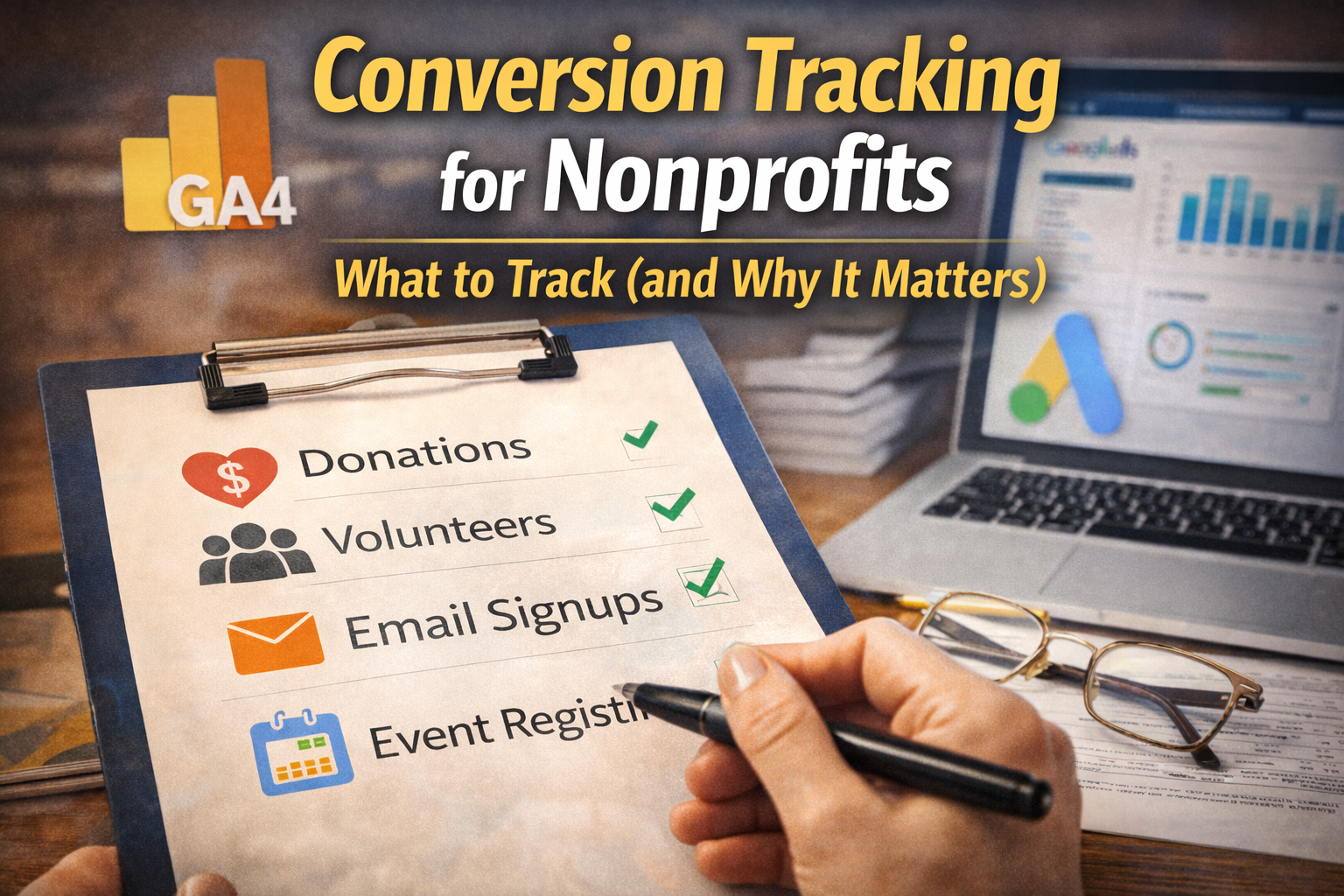
What nonprofits should track (core conversions)
Every nonprofit should track some version of the following:
✅ Donations
This is the most obvious conversion — but it’s often tracked incorrectly.
Track:
- donation completion confirmation page or event
- donation amount (if possible)
- recurring vs one-time donations
✅ Volunteer inquiries and applications
Volunteer traffic is high intent and often overlooked.
Track:
- volunteer form submissions
- volunteer application completions
- volunteer interest by program type
✅ Event registrations
Events are a major conversion path for many nonprofits.
Track:
- registrations
- ticket purchases (if relevant)
- “Add to calendar” actions (optional)
✅ Email list signups
Email is one of the most valuable channels for nonprofits.
Track:
- newsletter signups
- resource downloads
- marketing plan template requests
✅ Contact forms and phone calls
Even if your nonprofit isn’t “sales-focused,” inquiries matter.
Track:
- contact form submissions
- click-to-call actions on mobile (if used)
- key outreach requests (partner inquiries, sponsorship interest)
Advanced tracking (high ROI, often missed)
If you want stronger insight, also consider tracking:
✅ Engagement with key mission pages
Track page depth or time only when it supports an outcome, such as:
- program page views
- eligibility / intake pages
- donation journey progression
✅ Micro-conversions
Useful micro-conversions include:
- “donate” button clicks (as a supporting signal, not the primary conversion)
- PDF downloads
- video completion on high-intent pages
Common tracking mistakes
We frequently see:
- duplicate conversions inflating numbers
- conversions firing on page load
- “thank you page” tracking breaking during site updates
- GA4 and Google Ads not aligned
- nonprofit CRMs not connected to a measurable funnel
These mistakes lead to false optimization.
Closing thoughts
For nonprofits, conversion tracking isn’t about vanity metrics — it’s about accountability. When you know what actions matter most, you can confidently invest in content, ads, and campaigns that create real impact.
If you’re unsure whether your tracking is accurate, that’s worth fixing first — because everything downstream depends on it.
AI & Search Optimization
Contact
FAQ
Q: Do nonprofits need GA4 for conversion tracking?
GA4 is helpful, but the key is consistent conversion measurement across platforms.
Q: What’s the most important conversion to track?
The conversion closest to mission impact: donations, registrations, volunteer signups, and meaningful inquiries.